Feifei
Hello and welcome to The English We Speak, where we explain phrases used by fluent English speakers so that you can use them too. I’m Feifei, and I’m here with Beth. Hi Beth.
Beth
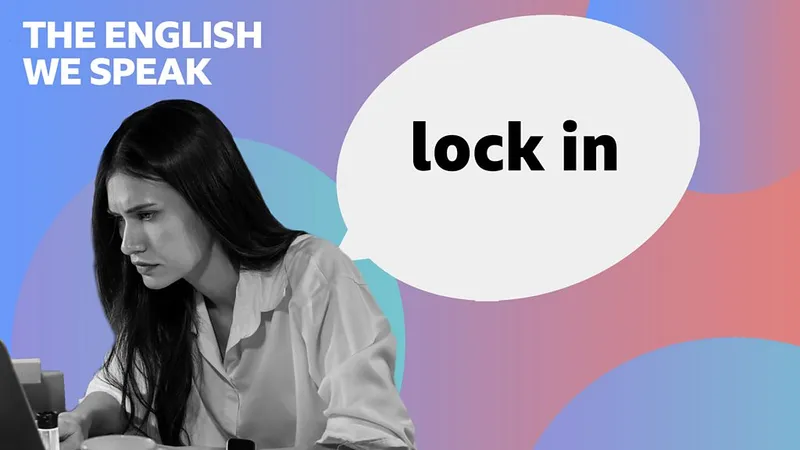
Hi Feifei. I am exhausted. I’ve been studying for hours before my Spanish exam. I really had to lock in last night.
Feifei
Lock in? You weren’t locked in a room, were you?
Beth
No! ‘Lock in’ means focus really hard on something, commit to the tasks and avoid distractions. I turned off my phone and studied as much as I could.
Feifei
I see. So you worked seriously and with concentration. ‘Lock in’ is all about intense focus, determination and boosting productivity.
Beth
Exactly. All my focus was on my revision – no distractions. You might also hear ’lock in’ about sports. Players might lock in before they play a big match.
Feifei
Yes. Also, we can lock in on our goals. For example, I’m preparing to run a half marathon in three months, so I need to lock in on my fitness goals.
Beth
Wow. Good luck.
Feifei
Yes. Thank you. Let’s listen to more examples of ’lock in’.
Examples
I really need to stop failing my driving test. I’m going to have to just lock in and do loads of practice.
Right, guys. I’ve done no work all day, so I’ve had a coffee, and this afternoon I really just need to lock in and get some stuff done.
I never see my kids in the evening anymore. They’re locking in for their exams.
Beth
‘Lock in’ is informal. You’re more likely to use it with friends and family than in a professional setting.
Feifei
We can also describe someone as being ’locked in’, meaning they’re doing something with extreme focus.
Beth
Well, I was definitely ’locked in’ last night, and I’m ready for this exam.
Feifei
Good luck, and we’ll be back next time with another useful English phrase. See you soon!
Beth
Goodbye.