Phil
Hello, this is 6 Minute English from BBC Learning English. I’m Phil.
Becca
And I’m Becca. Have you ever done something physically challenging, Phil, like running a marathon maybe, or climbing a mountain?
Phil
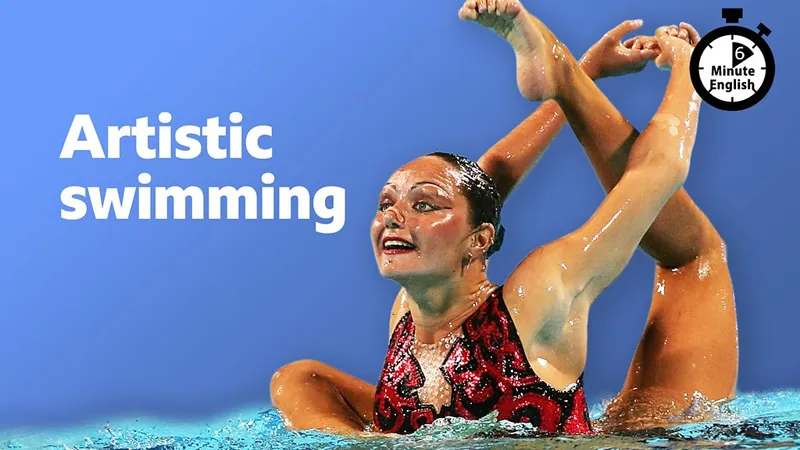
I’ve climbed some mountains, but only very little ones, so it wasn’t that challenging. If physical challenges are something you enjoy, maybe you should try artistic swimming, or synchronised swimming as it used to be called – a combination of dance and gymnastics with a difference. In artistic swimming, athletes dance underwater while holding their breath!
Becca
Did you say… dance underwater?
Phil
Yes, swimmers dance upside down in the water, holding their breath. As we’ll hear, it’s an extremely demanding sport which requires discipline, stamina and years of training. As usual, we’ll be learning some useful new words and phrases, and you can practise these with the quiz and worksheet on our website. That’s bbclearningenglish.com.
Becca
Great. But first, Phil, I have a question for you. Artistic swimming became an Olympic sport in 1984, but which country has won the most gold medals since then? Is it:
a) Russia,
b) China, or
c) the USA?
Phil
Ooh, I think it’s b) China.
Becca
Well, we’ll reveal the correct answer later in this episode. Silvia Solymosyová from Slovakia is a European Championship medallist. She’s also the first artistic swimmer with over a million social media followers, after videos of her walking upside down underwater went viral. Here, she explains the different types of swimming dances, called routines, to Datshiane Navanayagam, presenter of BBC World Service programme The Conversation.
Datshiane Navanayagam
If you had to explain artistic swimming to someone who has never seen it, how would you describe it?
Silvia Solymosyová
So, I would say it depends if you’re watching, like, a solo or duet or team routine, because in solo there’s one person, in duet there’s two people, and in team routines there can be eight people or ten people. And in the team routines, there’s a lot of lifts. And actually in the routines we are smiling, but we are hiding behind the smile because we are actually, maybe, dying…! We don’t have oxygen, so… but we are smiling and people think that it’s easy when it’s actually not.
Phil
Artistic swimming routines are performed solo, meaning by just one person, or as a duet, which means by two people. There are also team routines where one swimmer is lifted up out of the water. What all these routines have in common is that, physically, they are incredibly hard.
Becca
Yes, artistic routines are done upside down, underwater, without oxygen. The swimmer’s movements need to be as graceful as a ballet dancer, and above all, it has to look effortless because judges award points for artistic expression. Silvia says she hides behind a smile – an idiom meaning to hide pain by presenting a happy outward appearance.
Phil
To succeed at the top level of any sport requires a huge amount of dedication. Silvia trains eight hours a day, six days a week, under the guidance of her coach, who’s also her mum and a former artistic swimming champion herself. Here, Silvia discusses the sacrifices she’s made to succeed, with Datshiane Navanayagam for BBC World Service’s The Conversation:
Datshiane Navanayagam
How easy was it being trained and coached by your mum?
Silvia Solymosyová
I think it’s good on one side because you can practise more at home, but on the other hand, it’s not sometimes good because you’re training when you’re at home, when you’re supposed to be, like, chillin’.
Datshiane Navanayagam
There’s no respite from it, in a way, I guess.
Silvia Solymosyová
Yeah, I didn’t have time for anything else.
Becca
Silvia thinks there are good and bad things about being coached by her mum. It’s good because she can practise at home, but on the other hand, it feels like she’s training all the time. She uses the phrase on the other hand to show this contrasting opinion. What Silvia really looks forward to is chillin’ – a slang word meaning relaxing or hanging out.
Phil
For young athletes, balancing sport with school and friends is difficult, and it’s hard to get a respite from training. A respite is a temporary break from doing something difficult. Do you know what, Becca? I think I need a respite from all this talk about training. Now, what was the answer to your question?
Becca
Ah yes, Phil! I asked you which country had won the most gold medals for artistic swimming since the beginning of the Olympic sport?
Phil
And I said I thought it was China.
Becca
Well, you’re very close geographically. It is, in fact, Russia. OK. Let’s recap the vocabulary we’ve learnt, starting with solo – something done alone. And duet – something done by two people.
Phil
The idiom hide behind a smile means to hide painful feelings by presenting a happy external appearance.
Becca
The phrase on the other hand is used to introduce a contrasting opinion or statement.
Phil
Chillin’ is slang for relaxing.
Becca
And finally, a respite is a break from doing something difficult.
Phil
Once again, our six minutes are up, but if you’d like to practise the vocabulary you’ve learnt from this or any of our other episodes, then head over to our website, bbclearningenglish.com, for quizzes, pronunciation tips and much more. Thanks for joining us and goodbye for now.
Becca
Bye!